
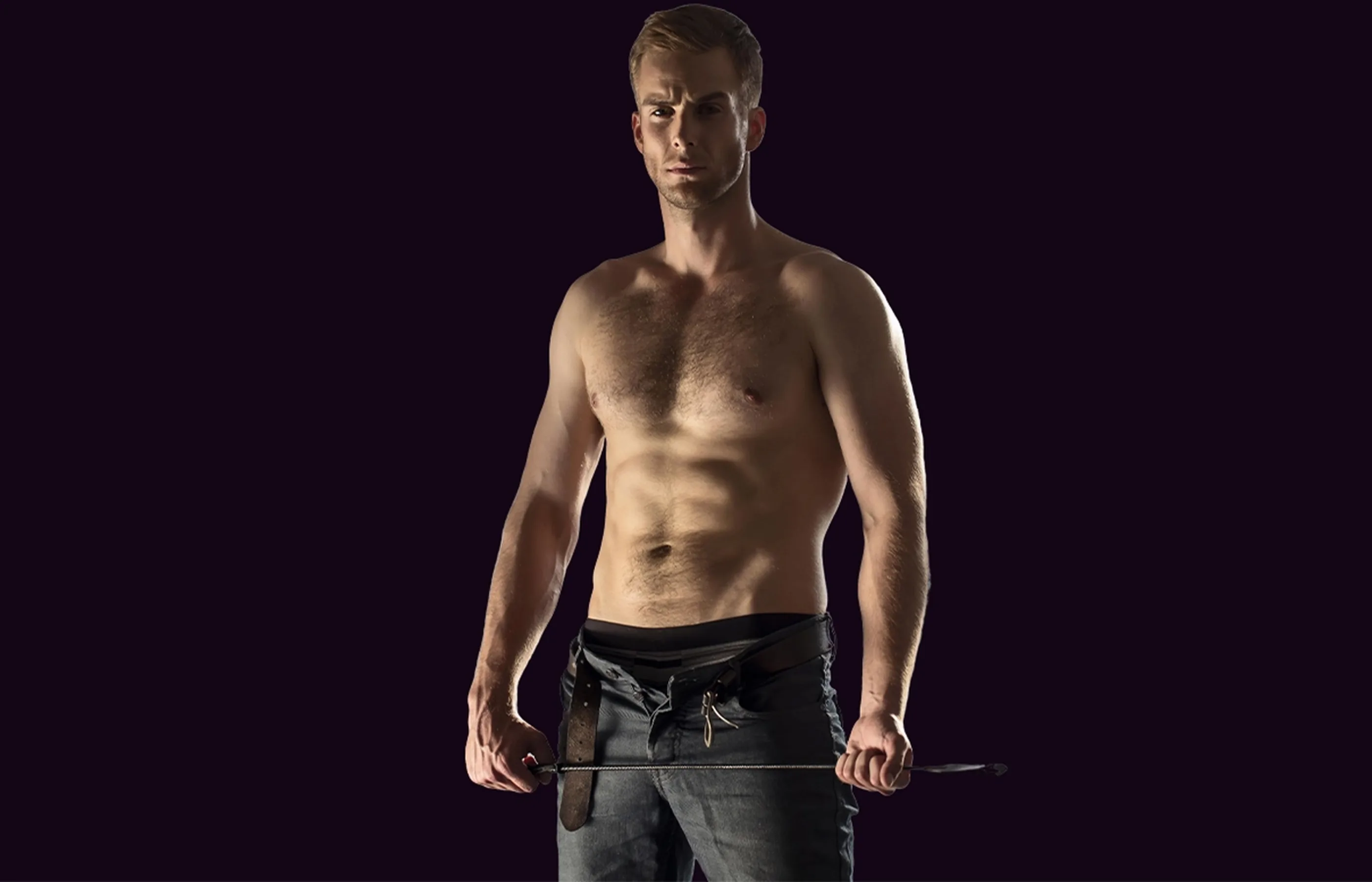
Utah · Leather & Kink
Gay BDSM in Utah.
Most of what straight BDSM does, it learned from gay men. That is not a courtesy — it is the history.
✦ 100% Free to Join · Discreet Billing · No Card Required ✦
01
The source, not the subset
Here is the thing almost nobody says plainly: modern BDSM culture is substantially an inheritance from gay leather. Not a parallel tradition, not an influence — the actual origin of most of what the wider scene now treats as normal.
The lineage is traceable. After the Second World War, gay servicemen came home to a country with no place for them, and some of them found each other through motorcycle clubs — organisations that already had structure, hierarchy, earned membership and a uniform that happened to be leather. Out of that came the clubs, then the bars, then the protocols: the formality, the titles, the mentorship, the idea that you are brought into a thing by someone who vouches for you rather than simply turning up.
Look at what the straight scene does now and you are looking at that inheritance. Protocol. Earned titles. Leather as significant rather than decorative. The vouching system that makes vetting possible. The whole apparatus of the Old Guard — a phrase people use loosely without always knowing it describes a specific gay male tradition with specific rules.
None of which means the modern gay scene is a museum. It means that when a straight newcomer at a Utah munch says the formality feels theatrical, they are looking at something functional whose function was worked out by people for whom discretion was not a preference but a legal necessity.
02
Salt Lake's queer history is real
Utah is not a footnote here, and that is unusual enough to be worth stating. From the late 1940s, State Street held a genuine gay bar row in the shadow of Temple Square — Radio City, widely counted among the oldest gay bars in the American West, poured there for seven decades before it finally closed in 2017. A visible queer nightlife surviving that long, in this state, is not an accident. It is an institution.
The leather part has an address too. The Sun was the community's living room for a generation — and its levi-leather bar, the room where the code of boots, denim and hide meant what it meant everywhere else in America. When the August 1999 tornado tore through downtown and took the building, the community simply rebuilt: first the Trapp, then today's Sun Trapp, the direct descendant of that lineage. A bar culture that survives a literal tornado is not a scene passing through, and the people who built it were doing so in a city and an era where doing so cost something real.
There is a symmetry in it that is almost too neat. Leather culture is built on ritual, hierarchy, protocol and earned belonging — and Utah is a state that understands all four in its bones. Men raised inside one highly structured tradition have been finding the leather tradition unusually legible for as long as the scene here has existed. The structure lands differently when you grew up with structure. The scene grew in exactly the soil you would expect, even if the soil would be horrified to hear it.
So when someone tells you Utah doesn't have a gay leather history, the correct response is that they haven't looked. It has one of the Mountain West's longer ones, and it is documented.
03
Where it actually is now
Honestly: fewer bars than there were, and that is not a Utah story, it is a national one. The gay bar as an institution has been contracting for twenty years, and leather bars contracted first and hardest. Anyone selling you a thriving venue circuit is selling you 1989.
What Utah has instead is a geography. The Sun Trapp persists on the west side of downtown Salt Lake — the direct descendant of that Sun lineage, and still the closest thing the state has to a levi-leather bar. Downtown and Sugar House are the community's centre and have been for years: not a leather district, but the place the community actually lives. Sugar House also has Blue Boutique, which has been an alternative and fetish retailer long enough to be a landmark in its own right.
Venues close. That is the one reliable fact about this, so treat any list — including this one — as a starting point rather than a current answer. What persists is the network of people, and the network is findable in a way the venues are not.
Outside the Salt Lake Valley it thins fast, and the honest answer is that Ogden, Provo and St. George have gay kink populations but not gay kink infrastructure. Park City is the exception worth knowing — a resort town whose winter season, Sundance above all, creates a genuine, if temporary, density that nothing else outside the capital matches.
04
What's actually different in practice
Three things, and they surprise people arriving from the wider scene.
Protocol runs heavier. Titles mean something, and they are earned rather than announced. Leather is worn with an intent that is legible to people who know how to read it. The wider scene often treats this as costume; in gay leather it is closer to a uniform, in the specific sense that a uniform tells you something true about the person wearing it.
Mentorship is structural, not incidental. The tradition is that you come in through someone — that an experienced person takes responsibility for teaching you, and that their reputation is attached to how you turn out. That is a real obligation in both directions, and it is why the gay leather scene tends to be simultaneously more formal and more welcoming than newcomers expect. Formality is not coldness. It is the shape the welcome takes.
Leather family is a real institution. Not a metaphor for close friends — a structure with roles, obligations and duration, which for a lot of men has functioned as the family that the biological one declined to be. In a state where discretion is still a live requirement for plenty of people, that has weight.
The practical consequence for a newcomer: turning up in new gear with a self-given title is the single most recognisable error, and the community will simply be polite to you forever. Turning up saying you know nothing and would like to learn is close to a password.
05
Utah's specific problem: distance and density
The arithmetic that governs everything else on this site is worse here, for a reason worth stating plainly. A gay kinkster is a subset of a subset. If the lifestyle is a small fraction of the population and the gay male population is another small fraction, the intersection in Logan is a handful of people who may not know each other exist.
The Salt Lake Valley's million-plus make the intersection viable. Ogden's northern front makes it small but real. Beyond the Wasatch Front it becomes a genuine isolation problem, and the men living it will tell you the drive to Salt Lake is a thing they do, not a thing they consider.
This is the clearest case on the entire site for a searchable, distance-sorted membership, and it is why gay men in this state use platforms more heavily than the straight scene does — not as a substitute for community, but as the only mechanism that solves a density problem geography created. There is no version where rural Utah grows a leather bar. There is a version where the twelve compatible men in a hundred-mile radius can find each other.
06
The honest part
Two things that don't get said often enough.
The first: the gay leather scene has an age structure that shows. The men who built it are older now, the generation that would have inherited it was hit by an epidemic that took a disproportionate share of exactly the people who carried the institutional memory, and the tradition has gaps in it that are not anyone's fault. If you are young and interested, you are more welcome than you think, and the welcome is partly relief.
The second: not everything under this heading is leather. Plenty of gay men in Utah are into kink and have no interest in the tradition, the titles or the vests — and that is entirely legitimate. Leather is the history and it is not the whole present. Nobody is required to join a lineage to be tied up.
What the history is good for is understanding why the scene works the way it does, and that understanding is genuinely useful whichever door you come in through.
The Leather Question
How It Got Here.
Utah is not a footnote in this history. Salt Lake has one of the Mountain West’s longer queer lineages, and it is documented.
Servicemen & the clubs
Gay servicemen return to a country with no place for them. Motorcycle clubs offer structure, hierarchy, earned membership — and a uniform that happens to be leather.
State Street
Radio City opens on State Street and becomes the anchor of Salt Lake’s gay nightlife — a run that lasts seven decades.
The Sun
The Sun becomes the community’s living room and Utah’s levi-leather bar. Leather culture has an address, and it is a real one.
The tornado
The tornado that tears through downtown Salt Lake destroys The Sun. The community rebuilds around the Trapp; the lineage refuses to end.
The gap
An epidemic takes a disproportionate share of the men carrying the institutional memory. The tradition still has gaps in it that are nobody’s fault.
The Sun Trapp & Pride
The Sun Trapp carries the levi-leather lineage. Utah Pride is among the Mountain West’s largest. Venues close; the network doesn’t.
Venues close constantly. Treat any list as a starting point — the network of people is what persists.
Straight Answers
Casual Play Questions.
Is there a gay BDSM scene in Utah?
Where is Salt Lake's queer history?
What's the difference between gay BDSM and the wider scene?
Do I have to be into leather?
I'm new. Will I be welcome?
What if I'm not near Salt Lake?
Keep Reading
The Other Utah Guides.
Find Your People
Utah Men. Real Distance.
Free to join, free to browse. See who’s actually within driving distance before you decide anything.
✦ Free to Join · Private Profiles · Real Local Members · 18+ Only ✦